Smart farming key to saving Ghana’s environment, economy – Agric Minister

By: Rebecca Okine
Minister of Environment, Science and Technology, Ibrahim Murtala Mohammed, has called on farmers to embrace smart and sustainable agricultural practices, warning that current methods are putting both the environment and the economy at risk.
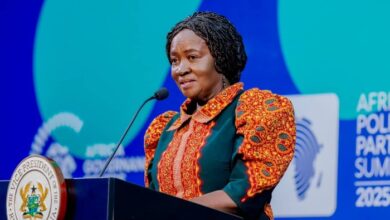
Speaking at the launch of the Status Seminar 2025 in Bonn, hosted by the Forum for Agricultural Research in Africa and the German Institute of Development and Sustainability (IDOS), Mr. Mohammed highlighted the pressing need for environmentally responsible farming.
“We all need to act responsibly by engaging in an agricultural system which does not destroy the land,” he said.
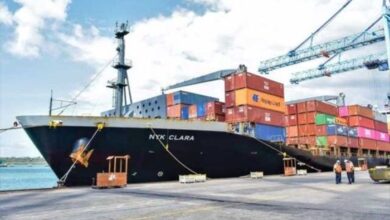
The Minister revealed that Ghana spends over GHS 3 billion annually on food imports such as rice and poultry — a dramatic increase from about $500 million in 2016. He warned that this trend is unsustainable.
“When we are spending $3 billion importing what we have the capacity to produce, it’s going to affect the economy,” Mr. Mohammed stated.
He emphasized the importance of supporting smallholder farmers in particular, encouraging the use of methods that safeguard soil quality and minimize environmental damage.
“The chemicals they use should not pose a danger to the land or the environment, and the only way we can ensure this is through research,” he emphasised.
Mr. Mohammed also highlighted the critical role of innovation and scientific collaboration. He announced the launch of Ghana’s first Science and Technology Forum, aimed at linking researchers, academia, and the private sector to promote data-driven solutions in agriculture.
According to the Minister, research-driven solutions are key to transforming Ghana’s agricultural landscape, making it more productive, resilient, and sustainable.
“Through research, we can come up with several means of smart farming; this is what we need to focus on as a nation,” he added.
The Status Seminar 2025 serves as a vital platform for advancing sustainable agriculture and land management across Sub-Saharan Africa. Over 120 leading researchers, policymakers, and development practitioners are convening in Accra from June 2 to 6, 2025, where they will exchange ideas on climate resilience, agricultural innovation, and sustainable land use.
Hosted by the German Institute of Development and Sustainability (IDOS), the Forum for Agricultural Research in Africa (FARA), and the Center for Development Research (ZEF) at the University of Bonn, the seminar blends cutting-edge science with grassroots innovation.
The forum will spotlight four major regional research initiatives, namely COINS, DecLaRe, Minodu, and InfoRange — along with INTERFACES, a cross-cutting support programme that connects institutions across Germany and several African nations. Together, these projects aim to deliver inclusive, evidence-based, and scalable solutions to some of the region’s most pressing challenges in agriculture.