

We’ll Ensure Banks Commit To Recapitalization Plans
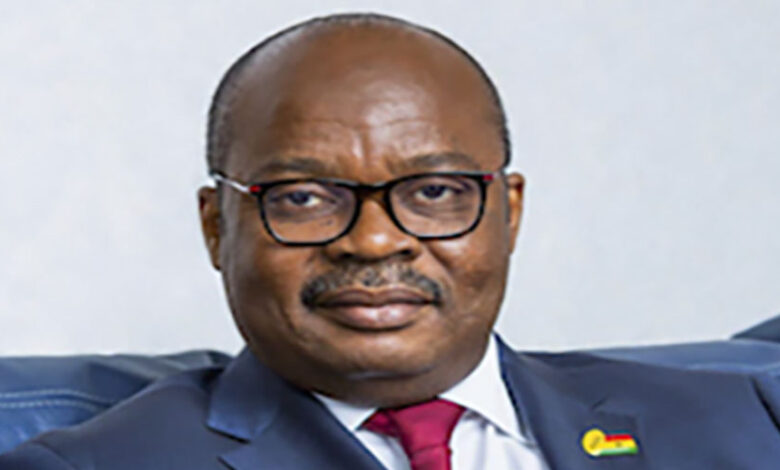
– To strengthen solvency, BoG pledges
Story: Isaac AIDOO, Accra
THE Bank of Ghana (BoG) has pledged to ensure that banks with capital shortfalls adhere to their committed recapitalization plans to strengthen solvency.
The commitment comes in the wake of stronger-than-anticipated economic growth and improved macroeconomic conditions positively impacting the banking sector.
Governor of the Bank, Dr. Ernest Addison, told journalists in Accra that supervisory activities will be intensified to ensure that banks address the high Non-Performing Loans (NPLs) ratio, which poses potential risks to the industry’s stability.
Macroeconomic Conditions
“The improvement in domestic macroeconomic conditions is also expected to bolster debt servicing capabilities of corporate and household sectors, which would help mitigate further build-up of NPLs within the industry,” the Governor stated.
The BoG approved recapitalization plans for undercapitalized banks, requiring them to inject at least one-third of the necessary capital annually over a three-year period ending in 2025 to achieve the required capital levels. This phased approach aims to ensure a structured and sustainable path to full capitalization.
Furthermore, the BoG has adopted escalating punitive remedial and corrective measures against banks that fail to comply with the minimum recapitalization requirements. This strategy underscores the central bank’s commitment to maintaining the stability and resilience of the financial sector.
BoG’s Proactive Measures
It will be recalled that government set aside some ¢2.3 billion for the recapitalization of the National Investment Bank (NIB). The initiative was part of a broader strategy to strengthen the governance structure, enhance operational efficiency, and improve risk management within state-owned banks.
The BoG’s proactive measures reflect its dedication to ensuring that banks with capital gaps remain committed to their recapitalization plans, thereby bolstering the overall health and stability of Ghana’s banking sector.
Ghana’s banking sector demonstrated robust performance in 2024, with significant growth in assets, capitalization, and liquidity, as reported by the Bank of Ghana (BoG). noted that the sector’s total assets expanded by 33.8% during the year.
The Capital Adequacy Ratio (CAR), inclusive of regulatory reliefs, experienced a slight increase to 14.0% in December 2024, up from 13.9% in December 2023. Excluding these reliefs, the CAR saw a more substantial rise to 11.3% from the previous year’s 8.3%.
Improved Profitability
Profitability within the sector improved compared to 2023, though the growth rate decelerated, leading to moderated profitability indicators. Elevated credit risk remains a concern, as evidenced by the industry’s Non-Performing Loans (NPL) ratio, which climbed to 21.8% in December 2024 from 20.6% the previous year. This resilience is attributed to enhanced domestic macroeconomic conditions.
Money market rates exhibited a downward trend throughout the year. The 91-day and 182-day Treasury bill rates decreased to 27.73% and 28.43%, respectively, in December 2024, from 29.39% and 31.70% in December 2023.
364-day Instrument
Similarly, the 364-day instrument rate declined to 29.95% from 32.97% over the same period. The Interbank Weighted Average Rate (IWAR) also fell to 27.03% in December 2024, down from 30.19% a year earlier.
These reductions contributed to a decrease in average lending rates for banks, which dropped from 33.75% to 30.25% during the same timeframe. Ghana’s banking sector in 2024 showcased strong asset growth and maintained adequate capitalization and liquidity levels. However, the increase in non-performing loans underscores the need for continued vigilance in credit risk management.



