

Beige-Bank trial: funds were not paid to accused, witness
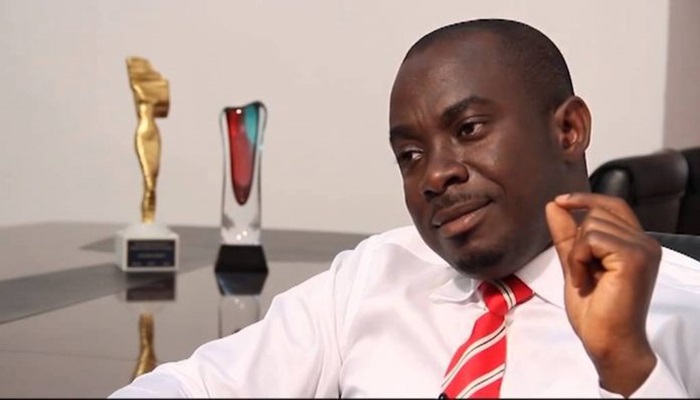
Mr Emmanuel Anyedina, the fifth witness in the ongoing trial of Michael Nyinaku, the accused former CEO of the defunct Beige Bank, said the funds were not paid to the accused.
He testified as the former Finance Manager of Beige Care Health Insurance Scheme Limited, formerly Empire Health Insurance company, a private insurance firm acquired and registered under the National Health Insurance Authority as a subsidiary of The Beige Group (TBG).
Mr Anyedina stated that the accused had been charged with stealing funds transferred from the accounts of a company named First Africa Savings and Loans Limited (FASL) to Beige Care, and that he was before the High Court to explain why the monies were transferred and how they were used.
Speaking on two FASL account statements involving two transactions: GH₵330,000 and GH₵62,000 credited to Beige Care from FASL on May 2 and June 1, 2018, he said that despite the accused being charged with stealing those funds, they were not paid to him.
Giving a further explanation, the witness said that when he asked Augustine Boakye, the Chief Finance Officer of TBG, why the transfer came from FASL rather than his firm, he was told that TBG had to borrow from FASL since it did not have enough finances to run Beige Care at the time.
He said Beige Care received the money and used it to further its operations; none of the funds totalling GH₵392,000 were paid to the accused.
The witness said he was responsible for voucher preparation and related documents for the accounts system, supervised the completion and update of financial records and ensured all statutory payments to the Ghana Revenue Authority and SSNIT, among other things.
He added that Beige Care clients were staff and dependants of all the Beige Group subsidiaries, including Beige Bank, which had the highest subscribers.
Mr Anyedina said Beige Care was funded by client contributions and, on occasion, by the main company during financial difficulties.
For instance, on May 3, 2018, FASL issued a GH₵42,734.64 voucher that he requested to Beige Care for salaries.
Mr Anyedina said that GH₵392,000 was transferred to the scheme to cover medical bills incurred by policyholders at the Lapaz Community Hospital, along with a GH₵31, 350 voucher signed him and two other officers for the development and implementation of WEB applications for the retail insurance module.
He said that on April 24, 2018, another voucher worth GH₵3,790.20 was released for medical bills for January 2018, and that another exhibit before the High Court, like the others, was approved upon a request of GH₵330,000 on May 2, 2018, when the scheme had only GH₵64,405.99 in its account and GH₵8,181.56 in total inflow from premiums and interest.
Mr Anyedina stated that Beige Care disbursed GH₵344,579.69 as medical claims from Beige Group in May 2018, emphasizing that if such funding had not been received, the scheme’s health care providers would have stopped providing services to clients.
He said that on June 2, 2018, Beige Care had a credit balance of GH₵58,007.91, with total inflows of GH₵189,106.69 for premium and interest.
The defense witness said that in June 2018, Beige Care paid medical insurance claims totalling GHC308,368.91 with the assistance of TBG.
He emphasized that none of the funds were paid to the accused, and that following the receivership, the scheme’s account was frozen, affecting operations and causing it to be downsized.
Personnel attempted to collect their salaries until the Court action was launched, at which point they gave up.
Nyinaku has been charged for theft and money laundering, which he has denied.
GNA



