Ghana’s Financial Challenge Lies in Waste – Finance Minister
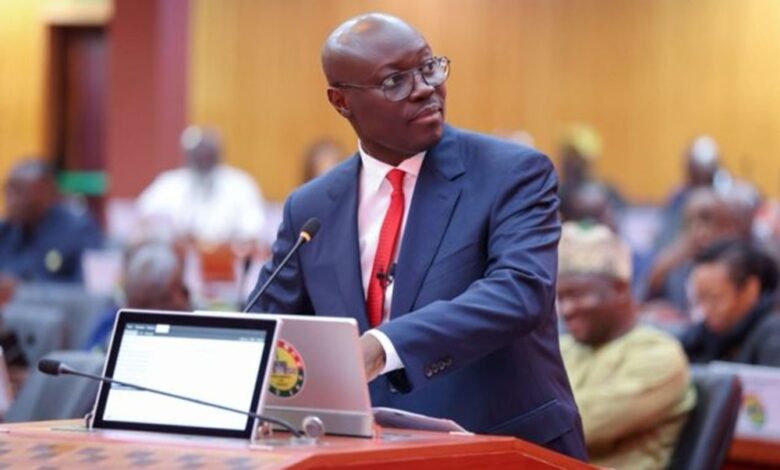
Finance Minister, Dr Cassiel Ato Forson, has attributed Ghana’s persistent fiscal difficulties to widespread waste within the country’s public financial management systems.
Speaking in a media interview, the Minister stressed that eliminating inefficiencies remains central to the government’s efforts to shore up domestic revenue and accelerate national development.
“Ghana’s problem is waste, we waste too much money, there is too much waste in the system, and if we are able to cut the waste, we will do a lot of things,” Dr Ato Forson said.
He noted that the ministry is intensifying efforts to plug leakages across state institutions while improving revenue mobilisation, especially as government phases out certain tax measures.
Touching on tax administration reforms, Dr Ato Forson revealed that the Ghana Revenue Authority (GRA) will step up its compliance drive to make up for revenue shortfalls expected from the scrapping of the COVID-19 levy. He said the deployment of Fiscal Electronic Devices would strengthen VAT collection and ensure that every taxable transaction is captured.
“The Fiscal electronic devices are to be able to collect the VAT and also the enhanced compliance measures that GRA will be introducing. Even though we have given back about Cedi 6bn to households business honest taxpayers, the GRA will be able to collect the tax, and these taxes will come a way to support the development of the country. We are going to make sure the dishonest taxpayer pays all the taxes,” he stated.
The COVID-19 levy was officially abolished in the 2026 Budget, presented on Thursday, 13 November, under the theme “Resetting for Growth, Jobs, and Economic Transformation.” Dr Ato Forson announced a number of VAT reforms aimed at easing the tax burden on households and businesses.
“The new VAT reforms will abolish the COVID-19 levy, remove the decoupling of the GETFund and NHIS levy from the VAT tax base, and eliminate VAT on reconnaissance and prospecting of minerals,” he said.
These reforms will also see the effective VAT rate reduced from 21.9 per cent to 20 per cent, an increase in the VAT registration threshold from GH₵200,000 to GH₵750,000, and an extension of VAT zero-rating on locally manufactured textiles to 2028.
According to the Minister, abolishing the COVID-19 levy alone will return GH₵3.7 billion to individuals and businesses, while the wider VAT adjustments are expected to provide nearly GH₵6 billion in relief to the economy.
Dr Ato Forson expressed optimism that the measures will stimulate growth, support private sector expansion and ease living conditions for Ghanaians.
“By abolishing the COVID-19 levy, the government is putting money back into the pockets of individuals and businesses,” he said, emphasising that the reforms demonstrate the government’s commitment to fairness, efficiency and inclusive economic recovery.