

Government to Construct 24-Hours Markets Nationwide- Local Government Minister
By: Solomon Tetteh Nartey
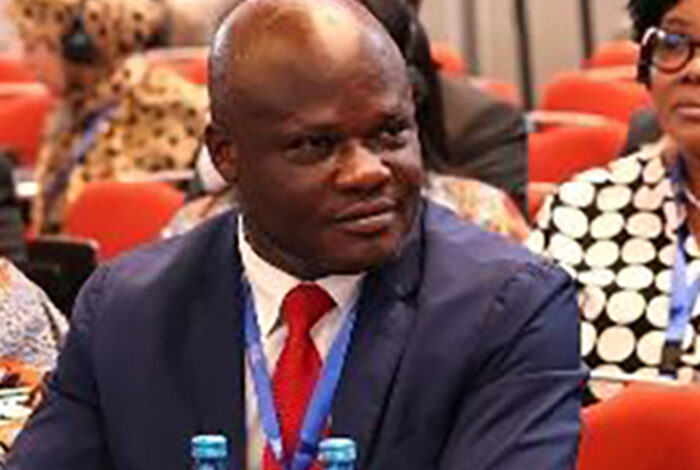
The Minister for Local Government, Chieftaincy and Religious Affairs, Ahmed Ibrahim, has announced that construction of 24-hour model markets across all 261 districts in the country will commence by December 2025.
According to the Minister, the project forms part of President Mahama’s 24-hour economy initiative, which seeks to promote round-the-clock economic activities, boost job creation, and improve local trade infrastructure.
Speaking to the media, Mr. Ibrahim stressed that the preparatory stages of the project began as far back as April this year, with the engagement of consultants to develop suitable market designs.
“The presidency is not just a ceremonial office it’s a serious business. So before the president cuts the sod, certain preliminary works must go on. We started engaging consultants in April to prepare the designs in line with the president’s 24-hour economy vision,” he explained.
The Minister noted that the Ministry of Local Government is responsible for coordinating the project through the Metropolitan, Municipal and District Assemblies (MMDAs), which will oversee construction and management at the local level.
“Construction of markets is the responsibility of the MMDAs, and since we supervise them, we decided to focus on how best to design markets that meet local needs,” he added.
Mr. Ibrahim disclosed that four prototype designs have been selected after extensive consultations, adding that regional ministers and MMDAs will be briefed on the final plans before implementation begins. He emphasised that the markets will be locally engineered, reflecting Ghanaian trading culture rather than foreign retail models.
“It’s not going to be like a shopping mall or Shoprite this is a market designed for Ghanaians, for our kind of goods and foodstuffs,” he clarified.
He also cautioned against the repetition of past mistakes where major infrastructure projects were left uncompleted due to poor planning or political transitions.
“We have had experiences where projects started by previous administrations were not completed. We don’t want to fall victim to those same challenges,” Mr. Ibrahim stated.



