Current Account Surplus Exceeds 2025 by $652m
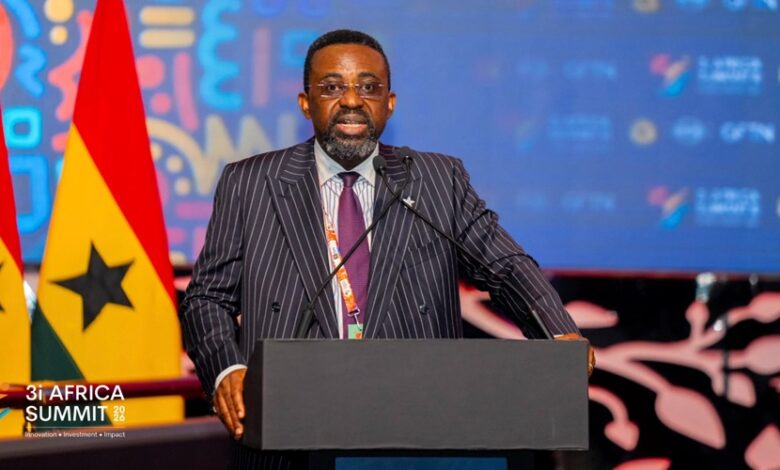
The Governor of the Bank of Ghana, Dr. Johnson Asiama, has disclosed that Ghana’s current account surplus for the first quarter of 2026 surpassed the same period in 2025 by US$652 million, signalling continued external sector strengthening.
He said the improvement reflects ongoing structural adjustments in the economy and emerging signs of resilience in Ghana’s external balances despite global and domestic headwinds.
Dr. Asiama made the disclosure at the opening of the Monetary Policy Committee (MPC) meeting held on May 18, 2026, at the Bank Square in Accra.
According to him, recent macroeconomic developments indicate that the economy continues to evolve, supported by policy reforms and improving investor sentiment.
He noted that the successful resumption of domestic treasury bond issuance earlier in 2026 was a key indicator of renewed investor confidence in the domestic financial market.
He also revealed that government has successfully issued a 7-year bond, while efforts are underway to lengthen the maturity profile of existing Government of Ghana securities to improve debt sustainability and manage refinancing risks.
“These developments show that the domestic economy is evolving and continues to undergo economic and structural changes,” he said.
Risks to Outlook
Despite the positive signals, the Governor cautioned that several risks continue to cloud the economic outlook and will be central to MPC deliberations.
He highlighted ongoing geopolitical tensions in the Middle East, noting that sustained increases in global energy prices could exert inflationary pressures and destabilise expectations if not carefully managed.
Dr. Asiama also pointed to potential vulnerabilities in the current account position, reserve accumulation and fiscal performance, warning that these factors could affect macroeconomic stability if they deteriorate.
He further stressed that the effectiveness of Ghana’s monetary policy transmission mechanism remains a key concern, particularly its ability to influence lending conditions and credit growth in the real economy.
“But if this is not getting the needed results, then maybe additional measures may be required to strengthen transmission,” he stated.
Policy Coordination Instrument and Reform Agenda
On the government’s request for a Policy Coordination Instrument (PCI) with the International Monetary Fund, Dr. Asiama described the arrangement as a credible step in Ghana’s post-programme engagement with the Fund.
He explained that the PCI preserves the signalling benefits of IMF engagement while allowing Ghana to maintain ownership of its reform agenda and reduce dependence on external financial support.
According to him, the framework will incorporate commitments aimed at strengthening the Bank of Ghana’s monetary policy framework, improving liquidity forecasting and enhancing policy transmission mechanisms.
He added that addressing operational constraints linked to the Domestic Gold Purchase Programme (DGPP) and broader foreign exchange intermediation systems will also form part of ongoing reforms.
Dr. Asiama further noted that the central bank will continue to review its foreign exchange framework and reserve management strategy to ensure alignment with macroeconomic stability objectives.
He stressed that maintaining discipline and strengthening policy coordination will be essential to sustaining recent gains and supporting long-term economic stability.