

Governance expert advocates for longer presidential terms to drive development
By Rebecca Okine
United Nations Governance Expert, Prof. Baffour Agyemang-Duah, has called for longer presidential terms in Ghana, arguing that this form of governance stability is crucial for national development.
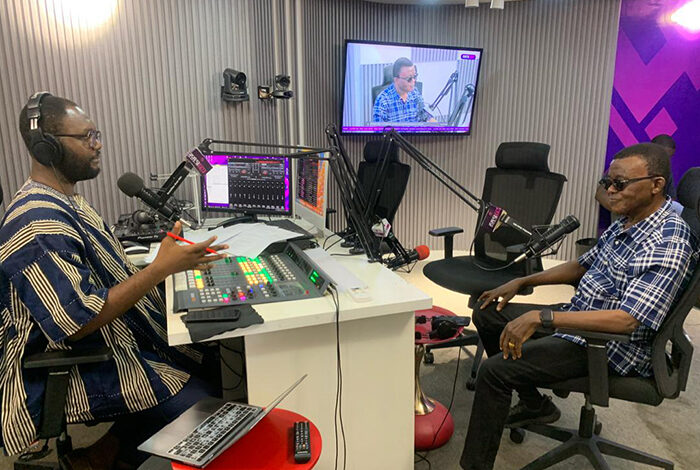
Speaking on Zed FM’s current affairs programme, The Focus, Prof. Agyemang-Duah said that frequent changes in government disrupts progress, as successive administrations abandon existing policies to introduce new ones. He cited Malaysia’s Mahathir Mohamad and Rwanda’s President Paul Kagame as leaders whose extended tenures have contributed to national transformation.
“Longevity in government is one of the critical factors of development,” Prof. Agyemang-Duah said. “Constant changes and reversals could be part of our difficulties. Therefore, after about three decades as a republic, it’s time to review our constitution.”
Prof. Agyemang-Duah proposed extending the presidential term to six years, arguing that Ghana’s current four-year system, adopted from the United States does not allow enough time for meaningful governance.
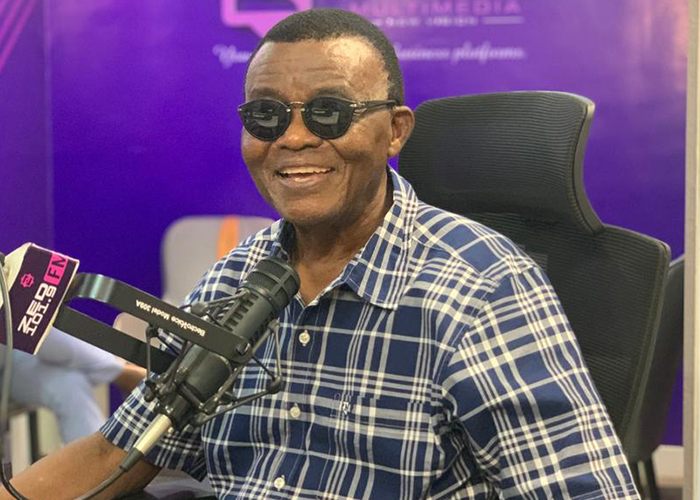
“Longevity allows leaders to develop sustainable systems,” he noted. “Every generation has its own approach to development, but post-Nkrumah leadership has failed to fully engage the people. Governments come and go, yet not much has been achieved in terms of sustained progress.”
He stressed that one of Ghana’s major challenges is the lack of a consistent national focus, as different political parties introduce new manifestos with each election cycle. “A good leader builds a unified people,” he added.
Civilian Governance over Military Rule
While advocating for constitutional reforms, Prof. Agyemang-Duah dismissed the notion that military rule could be the solution to a better governance for Ghana.
“Military governments have proven to be ineffective compared to civilian administrations,” he said. “The real issue is the mindset that a leader instills in the people to drive the national agenda.”
National Vision Beyond Political Parties
Speaking on the same issue, Michael Kwame Boadi, Fundraising Manager at the Ghana Integrity Initiative (GII), echoed similar concerns, urging Ghanaians to prioritise national development over political rivalry.
“Americans have the American Dream,” he said. “But here, we are stuck in NPP versus NDC, where anything the opposing party does is seen as bad, and we keep reinventing the wheel.”
Citing the Free Senior High School (Free SHS) policy as an example, Mr. Boadi argued that instead of politicising such initiatives, government should focus on refining them for long-term success.
“If there are challenges with the system, the thinking should be: how do we engineer a funding model that ensures the policy remains and is perfected?” he suggested.
While acknowledging that the Free SHS policy has improved access to education, he pointed out that quality remains a concern.
“What we need is clarity on our national goals and mechanisms that will be strictly enforced, regardless of the ruling party,” he said.
Ghana at 68
Ghana marked its 68th Independence Anniversary on Thursday, March 6, 2025, with a brief ceremony at the Jubilee House. As the nation marks this milestone, it continues to navigate pressing challenges, including inflation, cedi depreciation and effective governance.



