

Exports shrink to few markets
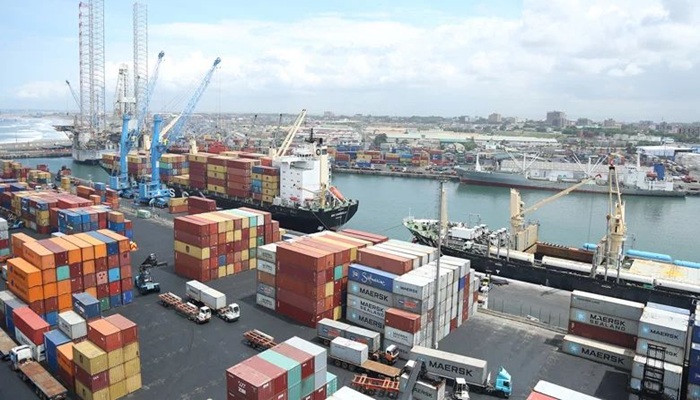
Ghana’s export trade with major industrial economies has narrowed sharply over the past two years, underscoring a worrying decline in market diversification and a growing dependence on just a few destinations, according to new data from the Bank of Ghana.
Between 2023 and 2025, exports to long-standing partners such as France, Germany, Italy, Japan and the United Kingdom have seen steady declines, both in absolute value and in their share of Ghana’s total exports.
In contrast, the Netherlands and the United States have retained their dominance, though their quarterly performance has been marked by notable volatility.
Trade analysts say this trend exposes Ghana to greater vulnerability from global economic fluctuations, given that any slowdown or policy shift in these key markets could significantly affect national export earnings.
A review of the last decade shows that Ghana’s trade relationship with industrialised countries has always been cyclical, but the recent contraction is particularly pronounced. Between 2015 and 2018, exports were on a strong upward trajectory, with the Netherlands and the US consistently ranking as Ghana’s top destinations.
During this period, the Netherlands alone accounted for more than 12 per cent of total exports in some quarters, while the US captured shares exceeding 7 per cent.
Meanwhile, France, Germany, Italy, Japan and the UK, though traditionally smaller markets, recorded periodic spikes linked to seasonal demand, price shifts in key commodities or short-term trade incentives.
However, after 2018, the composition began to change. Exports to France, Germany, Japan and the UK started a steady decline, while the Netherlands and the US maintained dominance but with increasingly erratic quarterly figures.
These swings reflected the global economy’s instability and Ghana’s limited insulation from external shocks.
Seasonal patterns also became clearer: second-quarter (Q2) exports tended to dip, while fourth-quarter (Q4) trade rebounded, likely tied to end-of-year demand cycles in advanced economies.
By 2023 to 2025, Ghana’s export structure had become more concentrated. The Netherlands and the US continued to account for the bulk of exports. The Netherlands’ share climbed to 7.2 per cent in Q4 2024 and 7.3 per cent in Q1 2025, while France, Germany, Italy, Japan and the UK each slipped below 2 per cent in most quarters.
The pattern, experts warn, highlights both opportunity and exposure. While trade with the Netherlands and the US has brought stability through sustained demand for cocoa, crude oil and gold, the narrowing market base poses a significant risk.



