

GREENGADE project focuses on climate-smart Agriculture
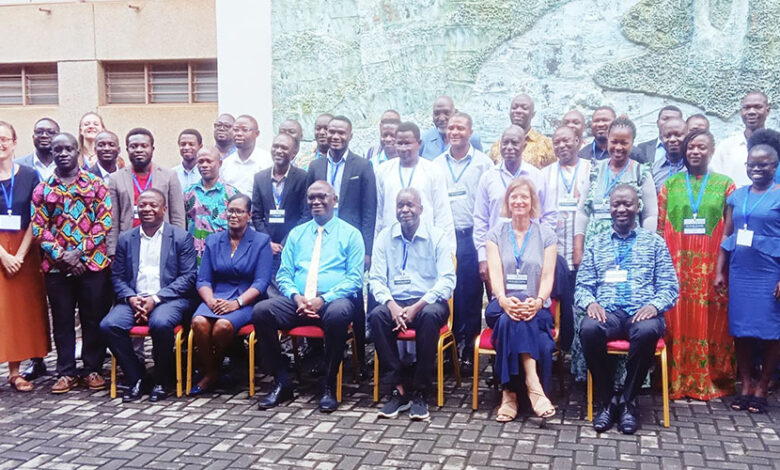
The final workshop of the Greenhouse Gas Determination in West Africa’s Agricultural Landscapes (GREENGADE) Project is currently taking place at the Forest Research Institute of the Council for Scientific and Industrial Research (CSIR-FORIG) in Fumesua, near Ejisu, Ghana. The four-day event has brought together experts and researchers from Ghana, Burkina Faso, Niger, and Germany to discuss the outcomes of extensive research on greenhouse gas emissions within agricultural landscapes across West Africa.
Funded by the German Federal Ministry of Education and Research, the GREENGADE project is part of the broader West African Science Service Center on Climate Change and Adapted Land Use (WASCAL II) initiative. It is a collaborative effort involving several institutions, including CSIR-FORIG (Ghana), the University Joseph Ki-Zerbo’s Laboratory Plant Biology and Ecology (Burkina Faso), the Radio-Isotopes Research Institute in Niger, and the Institute for Environment and Agricultural Research (Burkina Faso). Key German partners include the University of Potsdam and the University of Kassel.
The primary goal of the GREENGADE project is to evaluate greenhouse gas emissions and carbon storage dynamics related to the agricultural sector at both national and regional levels in West Africa. The findings are expected to guide national and regional climate change adaptation policies and strategies, with a particular focus on promoting climate-smart agriculture among smallholder farmers.
Professor Anja Linstaedter, the Overall Consortium Investigator for the project, highlighted the importance of understanding greenhouse gas emissions and carbon sequestration in mitigating climate change in West Africa. “The project is about learning more about how much carbon is stored in the soil, trees, grass, and ecosystems,” she explained. “We also look at greenhouse gas emissions, such as carbon dioxide and methane, which are the culprits for increasing the temperature.”
Since its inception in 2021, the GREENGADE project has collected extensive data on carbon stocks and greenhouse gas emissions across different agricultural practices in Ghana, Burkina Faso, and Niger. The research has involved the use of specialized gas exchange measurement chambers and laboratory devices to quantify these emissions accurately. The data collected is crucial for national reporting on greenhouse gases and will contribute to developing more effective climate-smart agriculture strategies in the region.
Dr. Reginald Guuroh, Principal Investigator for the Ghana Team, emphasized the value of international collaboration in tackling complex environmental challenges. “Collaboration across continents has been essential in collecting vital data that would have been difficult to achieve individually,” he noted. “The partnership has also facilitated knowledge sharing and expertise exchange across countries and institutions.”
Dr. Kwame Oduro Antwi, Director of CSIR-FORIG, underscored the significance of such international collaborations in strengthening national research systems and providing technical support for climate change mitigation efforts in Ghana and the broader West African sub-region. He noted that addressing climate change requires concerted efforts to reduce greenhouse gas emissions, particularly those resulting from human activities. As the GREENGADE project concludes, the insights gained are expected to play a crucial role in shaping policies and strategies that support sustainable agricultural practices in West Africa, ultimately contributing to the global fight against climate change.



