Sidi Ould Tah Assumes Presidency of African Development Bank Group
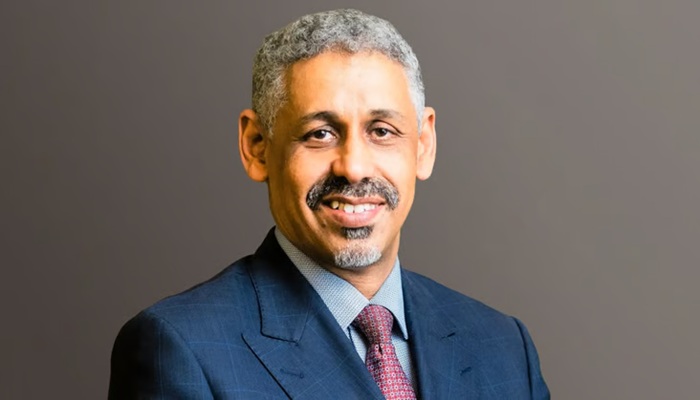
By Praisebell Rosemond Larbi
Mauritanian economist Sidi Ould Tah has formally assumed office as the ninth President of the African Development Bank Group (AfDB), following his election on May 29, 2025, during the Bank’s annual meetings where he secured 76.18 percent of the votes. He succeeds Dr. Akinwumi Adesina, who steps down after a decade of transformative leadership widely credited with reshaping Africa’s premier development finance institution.
Mr. Tah, who previously served as the long-standing head of the Arab Bank for Economic Development in Africa (BADEA), described his assumption of office as taking place at a “pivotal moment” for Africa. He said the continent is confronting demographic pressures, climate change shocks, and technological disruption, requiring a more agile, responsive, and innovative AfDB.
Founded in 1964, the Bank has grown into the largest development finance institution on the continent, with a growing voice on the global stage. Outlining his first 100-day priorities, Mr. Tah pledged to deepen partnerships with African governments, the private sector, and international allies. He promised to fast-track reforms, accelerate delivery, and expand collaboration with new actors such as sovereign wealth and pension funds. He further committed to revisiting AfDB’s investment models, including the launch of a dedicated peace investment pillar to address fragility across the continent.
Speaking directly to staff, whom he described as the Bank’s “most valuable resource,” Tah announced an imminent town hall meeting and emphasized the need for teamwork to ensure AfDB remains a compass for Africa’s development trajectory. He cautioned, however, that the institution should avoid overextension: “The Bank should not aim to be everything to everyone, but focus on areas where it can move the needle most.”
Dr. Adesina, a former Nigerian agriculture minister, leaves behind an impressive legacy. Under his stewardship, AfDB expanded its capital base from $93 billion in 2015 to $318 billion in 2025, secured a record $8.9 billion replenishment for its concessional financing arm, and launched the Africa Investment Forum, which mobilized $180 billion in investment commitments. The Bank also issued a landmark $3 billion COVID-19 social bond, one of the largest of its kind in the world.
According to AfDB data, its interventions transformed 515 million lives in the past decade—among them 231 million women—through access to electricity, clean water, sanitation, health services, and ICT infrastructure. Global leaders, including Ngozi Okonjo-Iweala and António Guterres, lauded Adesina for advancing food security, climate financing, and pandemic recovery.
Now at the helm, Mr. Tah inherits both a stronger balance sheet and an expanded global reputation for AfDB, but also a difficult context marked by rising debt vulnerabilities, tighter financing conditions, climate risks, and waning investor appetite. His ability to consolidate reforms while sustaining confidence will determine whether AfDB can maintain its trajectory as Africa’s leading development institution.