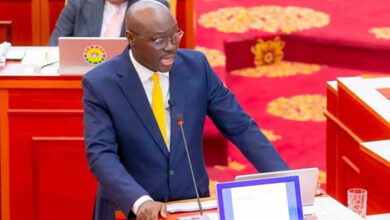
Build Reserves Before Returning to International Market – Deloitte Advisor Urges Gov’t

By: Solomon Nartey Tetteh
Associate Director, Finance Advisory at Deloitte, Dennis Brown, has urged government to exercise caution and build sufficient foreign exchange reserves before returning to the international capital market.
Speaking on Business Breakfast on Zed 101.9FM, Mr. Brown said although Ghana’s recent credit rating upgrade and positive assessments from the International Monetary Fund (IMF) make the country more attractive to investors, authorities must prioritise prudence and long-term stability over quick access to funds.
“We have to be very prudent and also very timely if we want to go to the international market. My suggestion would be that we build enough reserves before we go there,” he stated.
According to him, Ghana should use the current period of improved macroeconomic performance to strengthen its buffers and lay the foundation for structural reforms, particularly a shift towards an export-driven economy.
Mr. Brown explained that transforming the economy to focus more on exports would provide a more sustainable source of foreign exchange earnings and help the country steadily accumulate reserves.
“That gives you a more sustainable position when it comes to generating and building up your FX reserves. Then you are in a solid position,” he noted.
He stressed that strong reserves would enable the country to withstand external shocks for a reasonable period, rather than facing immediate distress when global market conditions deteriorate.
“If anything happens on the international market, you are probably able to hold on for a year or two because you’ve built so much reserves. By the time the market corrects itself, you would have had enough to hold your position safe and sound and still be on track,” he explained.
He warned that limited reserves could leave the country vulnerable within months of adverse global developments.
Mr. Brown cautioned policymakers against assuming that improved credit ratings automatically justify an immediate return to international borrowing.
“It’s not just a case of gaining improved ratings and therefore the floodgates have been opened to just go and cash in. You have to be careful that you are not going to acquire certain rates that will come and bite you later on,” he stressed.
He acknowledged that Ghana’s upgraded status means the country could access the market now and be viewed favourably by investors. However, he emphasised that the decision must be guided by strategic timing and favourable borrowing terms.
“When you see the IMF reports, they also back the improvements that we’ve had,” he stressed.